
Professional Cold Laser Therapy Systems (LLLT)
Class 4 and high-power Class 3B lasers for chiropractors, physical therapists, vets and pain clinics, compared with live prices.
Covers Class 4 and higher-power Class 3B systems. Before buying, review our cold laser regulations for clinics.
Our Top Professional Systems
Our most popular clinic lasers. Tap any model to see its full product page and live price.

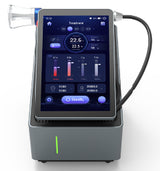
Our top class 4 line. Every detail is refined, with a skin-temperature sensor in the emitter.

Built-in protocols adjust for skin color, condition, chronicity and size. Great price per watt.

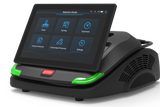
A great entry-level class 4. The Metal D30 is the best class 4 for the price.

The best class 3B on the market. Portable, battery-powered dual-wave systems.
See the full Avant LZ30 family →
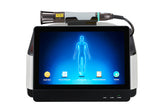
High peak power that stays safe. The LaserStim adds e-stim and point finding, so you can bill 97026 and 97032.
Cold laser therapy is a premium market with professionals charging up to $250 per session. We provide custom marketing literature with your name and logo for every professional system over $5,000.
Laser Guides by Practice
Each guide covers the conditions, protocols and lasers that fit that kind of practice.
Compare Professional Systems
Specs side by side. There is no single best system; each has advantages and trade-offs. Tap a model for its product page, or call us at 1-800-388-0850 for help deciding.
| System | Class | Power | Wavelengths | Pulsing | Portable | Warranty | Price |
|---|---|---|---|---|---|---|---|
 ReGen D32 |
Class 4 | 32 W | 810/650 nm | Both | ✓ | 5 Years | $16,950 |
 ReGen T62 |
Class 4 | 62 W | 810/980/650 nm | Both | ✓ | 5 Years | $26,500 |
 ReGen P82 |
Class 4 | 82 W | 810/915/980/1064/650 nm | Both | ✓ | 5 Years | $36,950 |
 ReGen H84 |
Class 4 | 84 W | 810/915/980/1064/660/450 nm | Both | ✓ | 5 Years | $54,950 |
 ATPmax XD |
Class 4 | 32 W | 810/650 nm | Both | - | 5 Years (console) | $10,950 |
 ATPmax XT |
Class 4 | 42 W | 810/980/650 nm | Both | - | 5 Years (console) | $14,950 |
| ATPmax XQ | Class 4 | 47 W | 810/980/1064/650 nm | Both | - | 5 Years (console) | Call |
 ATPmax XP |
Class 4 | 62 W | 810/915/980/1064/650 nm | Both | - | 5 Years (console) | $19,950 |
 EVO Metal S9 |
Class 4 | 9.5 W | 810 nm | Both | ✓ | 2 Years | $8,950 |
| EVO Metal D30 |
Class 4 | 30 W | 810/980 nm | Both | ✓ | 3 Years | $11,950 |
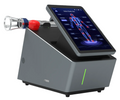 EVO Metal Q27 |
Class 4 | 27 W | 810/915/980/637 nm | Both | ✓ | 2 Years | $13,950 |
 Avant LZ30z |
Class 3B | 2.4 W | 808/637 nm | Both | ✓ | 3 Years | $7,875 |
 Avant ReVi Pro |
Class 3B | 1.3 W | 637/405 nm | Both | ✓ | 2 Years | $8,550 |
 MR4 LaserStim |
Class 1M | 25 W peak | 905 nm + 875/660 nm LEDs | Super-pulsed | - | 3 Years | $8,995 |
Specs and prices come from each product's listing on ColdLasers.org; prices update automatically. The ATPmax XQ is not listed online right now, so call for availability. If you find an error, please let us know.
Our Final Recommendations
Where we land after comparing these systems on the 11 criteria further down this page.
 Best Class 3B
Avant
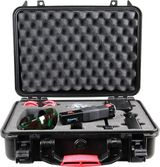
Offers the best balance between healing and pain control with great flexibility and ROI. Best choice if you want portability without Class 4 requirements. The most flexible class 3b system on the market.
 Laser + eStim
MR4 LaserStim
Combines laser, electrical stimulation, and diagnostics in one device. For anyone who does not have an X-ray machine, the diagnostic tool can help find problem areas like a herniated disk or damaged muscle.
 Best Class 4
EVOlaser, ATPmax & ReGen
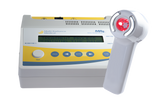
Excellent class-4 systems that do everything well. They have more of everything you want in a therapeutic laser and their prices are less than comparable class 4 competitors. The EVOlaser, ATPmax and ReGen provide the "wow" factor that will get your patients bragging to their friends about your quick results.
ROI Calculator
Calculate realistic return on investment based on your practice volume and fee structure. Adjust the numbers to match your typical treatment fees and patient volume.
Investment Summary
EVO Metal D30Revenue Projections
48 treatments per month
FDA Clearance & What Lasers Treat
Low level laser therapy (LLLT) devices are Class 3B and Class 4 therapy lasers that clinics use for pain control, inflammation reduction, and increased local blood flow. Portable Class 3B cold lasers start around $2,000 to $5,000, while high-power Class 4 clinic systems typically run $8,000 to $20,000 or more. Power, wavelength, and pulsing determine how deep the light reaches and how fast treatments go.
Under current FDA standards, cleared cold lasers are indicated for three primary benefits:
Pain Control
Temporary relief of minor muscle and joint pain, arthritis, muscle spasm, stiffness
Inflammation Reduction
Promotes relaxation of muscle tissue, reduces swelling in treatment area
Increased Blood Flow
Temporarily increases local circulation to promote recovery
The underlying science is photobiomodulation: specific wavelengths of light are absorbed by mitochondria, stimulating ATP production, the cellular energy that powers tissue repair. With 28% of Americans experiencing pain at any given time, it's no surprise professional laser therapy has become increasingly popular.
As a professional, you can buy a laser and advertise services focused on the three approved applications above. However, you cannot advertise for off-label applications. After you buy a cold laser, you are free to experiment with any application. You just can't advertise for the service.
11 Criteria for Selecting Your Laser
Not sure where to start? Here are the key factors to consider when evaluating therapy lasers for your practice.
Broad vs Pinpoint Probes
If you need trigger point or acupuncture-style therapies (including smoking cessation, laser acupressure, or working on small areas like hands), you might want a pinpoint probe. These allow high density (up to 167.4 J/cm²/min) in a concentrated area and make it easier to NOT get energy in the surrounding tissue, which is critical for acupuncture.
For most structural problems and deep problems, you want the largest probe diameter possible. Saturating a damaged quad with a small emitter is like trying to color a full sheet of paper with a ballpoint pen. Many flexible systems like the Apollo, TerraQuant, Avant, and EVOlaser allow both styles of probes, while many of the higher-end units are broad coverage only.
Wavelength
Close to 90%+ of European lasers and 80% of US therapy lasers operate in the 800nm–980nm (NIR) range. Research shows 810nm is by far the best wavelength to get a deep photochemical reaction.
Less efficient wavelengths can offset their lack of efficiency with extra power, but that often costs a lot more and has more potential for tissue heating. Based on research and many years working with lots of different lasers, we consider 810nm the "primary" wavelength and consider everything else to be like icing on the cake.
There are several manufacturers (like Erchonia®) that operate in the 440nm to 680nm wavelength range as a primary wavelength, but they are not the typical laser company.
Pulsed, Continuous & Sweeping
Pulsing a laser provides an additional stimulatory effect in addition to just the dosage that you get with a continuous wave laser. Pulsed and sweeping systems also allow for higher power levels while still being safe, since the tissue and the laser can cool down between pulses.
Research shows that continuous wave is best for neuropathies and nervous system damage, while pulsed is best for almost everything else. Some systems sweep the pulsing frequency through a range (like 1000 to 3000Hz) so that if there is a natural frequency that would have the strongest reaction, the system emits that frequency part of the time during therapy.
Power Output
One of the biggest debates in the industry is about power requirements. There is not one right answer, however in general:
- More power = shorter treatment times
- More power = better coverage of larger and deep areas
- More power = better pain control
Shorter treatment times mean you can help more patients and make more income. If the power is too low, the treatment might not ever get enough energy density into the tissue in a reasonable time.
Under-dosing is a bigger problem than over-dosing. Some manufacturers of lower-power devices have short treatment times but are ignoring the research and often drastically under-dosing. These systems are OK for some shallow, small applications but they typically generate very low energy densities that can take months or years to get the same result that you will get in weeks with a medium or high dosage.
Safety Class
Cold lasers are broken into 4 classes based on their ability to do damage (to the eye):
- Class 1 & 2: Cannot cause eye damage unless the beam is refocused
- Class 3: Moderate power, requires safety goggles
- Class 4: Can cause eye damage at a distance if not used properly, highest power, most flexibility
Higher power class 4 lasers provide the most flexibility, yet this advantage may be offset by the additional risk and liability of having such a powerful piece of equipment in your office. Keep in mind: "With great power comes great responsibility."
Portability
Lasers come in a variety of form factors, including handhelds, battery-operated portables, and desktop units. Desktop units can usually be installed on a mobile cart and can sometimes be used with an articulated arm for hands-free operation. Depending on your office layout and patient load, you might prefer one form factor over another.
Ease of Use
For some practitioners, the cold laser is a supplement to their overall business. In this case, ease of use is a priority since you don't want to put huge effort into mastering the cold laser. For others, the use of a flexible laser is a priority, as it will allow significant expansion of their business.
We understand that busy professionals don't have 20 minutes per patient to research treatment plans or enter individual variables into their laser. The best modern systems have touchscreen interfaces with protocol libraries.
Protocols
Lasers are only as good as the protocols that come with them. Many older systems required a PhD to find a good protocol and get it entered into the system. These days, the best lasers have "cookbook" style protocols, or a graphic menu where users can quickly find a protocol for each patient.
There is also more to the protocol than just documentation: the accuracy and repeatability of the protocol can have big impact on efficacy. The higher-end equipment will measure the output of the laser beams and adjust for condition, patient size and skin color so that every patient gets the optimum power.
Warranty & Repair
The industry standard warranty is 2 years. All manufacturers will repair units after the warranty period at the owner's expense. Warranty is more critical on higher-end units because the lasers are more prone to overheating and the cost of repair is higher.
Some of the best lasers are built in the US and any good laser will have a service center in the US for fast repairs.
*Thor has a 5-year warranty but requires the laser be returned annually for an expensive calibration to maintain the warranty.
Aesthetics & WOW Factor
The aesthetics and form of the laser are important to both the practitioner and the patient. For practitioners, a well-designed product allows them to focus on their patient and not the equipment. For patients, a professional-grade desktop machine often has a big "WOW" factor that gives the patient confidence that they are getting the absolute best treatment.
There is a big difference in customer perception if you compare using the older ML830 (which looks like a flashlight) to the EVO or ReGen laser (which have huge full-color graphic touchscreens).
ROI & Multimodality
Every successful practice must have a good return on their investment, but often there is an indirect result of owning a great therapy laser. More expensive machines allow for more flexibility and can mean faster results. The patients that see great results talk to their friends and this can often bring in more business and build your reputation. When you do your financial analysis, don't forget to factor in some good will.
With cold lasers, you really do get what you pay for.
For new practices that need many types of equipment to treat the widest variety of conditions, a multimodality system can save some money by combining multiple pieces of equipment into 1 unit. The MR4 LaserStim is unique because it is a laser, an e-stim device and a diagnostic tool. This laser has a better ROI in many cases because it simultaneously does e-stim and laser so you can bill insurance companies for both a 97026 (IR therapy) and 97032 (e-stim), essentially doubling your income if you work with insurance companies.
What's Included With Your Purchase
Personalized phone/video training on your specific system and conditions you treat
Comprehensive protocols for common conditions. We help find protocols for specialty applications
Phone and email support for the life of your laser: questions, troubleshooting, protocol help
Appropriate eyewear for your laser class, for practitioner and patient
For systems over $5,000: custom literature with your name and logo, originals included so you can edit or print
We match any authorized dealer's price on any system we carry
Low Level Laser Therapy Device FAQ
What is a low level laser therapy (LLLT) device?
A low level laser therapy device uses specific wavelengths of light that are absorbed by mitochondria, stimulating ATP production, the cellular energy that powers tissue repair. Clinics use LLLT systems for pain control, inflammation reduction, and increased local blood flow.
What can a low level laser therapy device treat under FDA rules?
FDA-cleared cold lasers are indicated for three primary benefits: temporary relief of minor muscle and joint pain, arthritis, muscle spasm and stiffness; relaxation of muscle tissue and reduced swelling; and temporarily increased local circulation. Practitioners can advertise only these cleared applications.
What is the difference between a Class 3B and a Class 4 laser therapy device?
Class 3B systems output between 5 and 500 milliwatts and are the classic cold lasers. Class 4 systems output over 500 milliwatts, which shortens treatment times and helps deliver more energy to deeper tissue. For a busy clinic, more power generally means faster treatments.
How much does a professional low level laser therapy device cost?
Portable Class 3B cold lasers typically start around $2,000 to $5,000. High-power Class 4 clinic systems usually run $8,000 to $20,000 or more. We price-match any authorized dealer and financing is available.
Are these laser therapy devices FDA-cleared?
Yes. Every system we sell is FDA-cleared. Under current FDA standards, cleared cold lasers are indicated for pain control, inflammation reduction, and increased blood flow.
Need Help Deciding?
We're happy to help you compare apples-to-apples, think about your priorities, and find the best cold laser for your office. We can assist in finding a unit that meets your needs.
We price-match any authorized dealer • Custom marketing materials included • Financing available
- Choosing a selection results in a full page refresh.